Plan your Trip
Everything you need before riding the Atlas
Explore all trail sections on the Trail Page and pick the route that fits your fitness level, comfort preferences, technical ability, and the season. Distances and elevation may sometimes look modest, but, don’t be fooled, the terrain and remoteness make these tours demanding.
What to expect
- All routes are self-supported - you must manage navigation, carry gear and plan for several days
- Accommodation can be basic, and you may occasionally depend on the hospitality of local people for a place to stay
- Some segments include rough, steep terrain where you will need to hike and carry your bike.
- The Atlas Mountains are wild and remote. Professional help is not guaranteed. Always plan extra time for delays or emergencies.
Once you have chosen your route, consider contacting the local tourism experts from the Atlas Mountain Trails Community Network for useful information on accommodation, transport, food provisions as well as new or alternative routes that might have developed in the meantime. Their contacts are listed on our Project Page and in the trail notes.
Disclaimer: Atlas Mountain Trails is a compilation of our experiences, shared to inspire MTB riders. Conditions may change, and we cannot take responsibility for the accuracy of all information or for the actions of individuals referenced here. The mountains are wild terrain - your safety depends on your own judgements and preparation.
Travel basics
Most international airlines accept bikes as checked luggage. Royal Air Maroc typically charges 50 EUR for domestic flights, 70 EUR for Europe, and 150 EUR for the US.
In Morocco public transport is possible but not always bike‑friendly.
- Trains (ONCF) do not carry bicycles.
- Supratours buses (operated by ONCF) do transport bikes and run between Rabat, Fès, Marrakech, and Agadir.
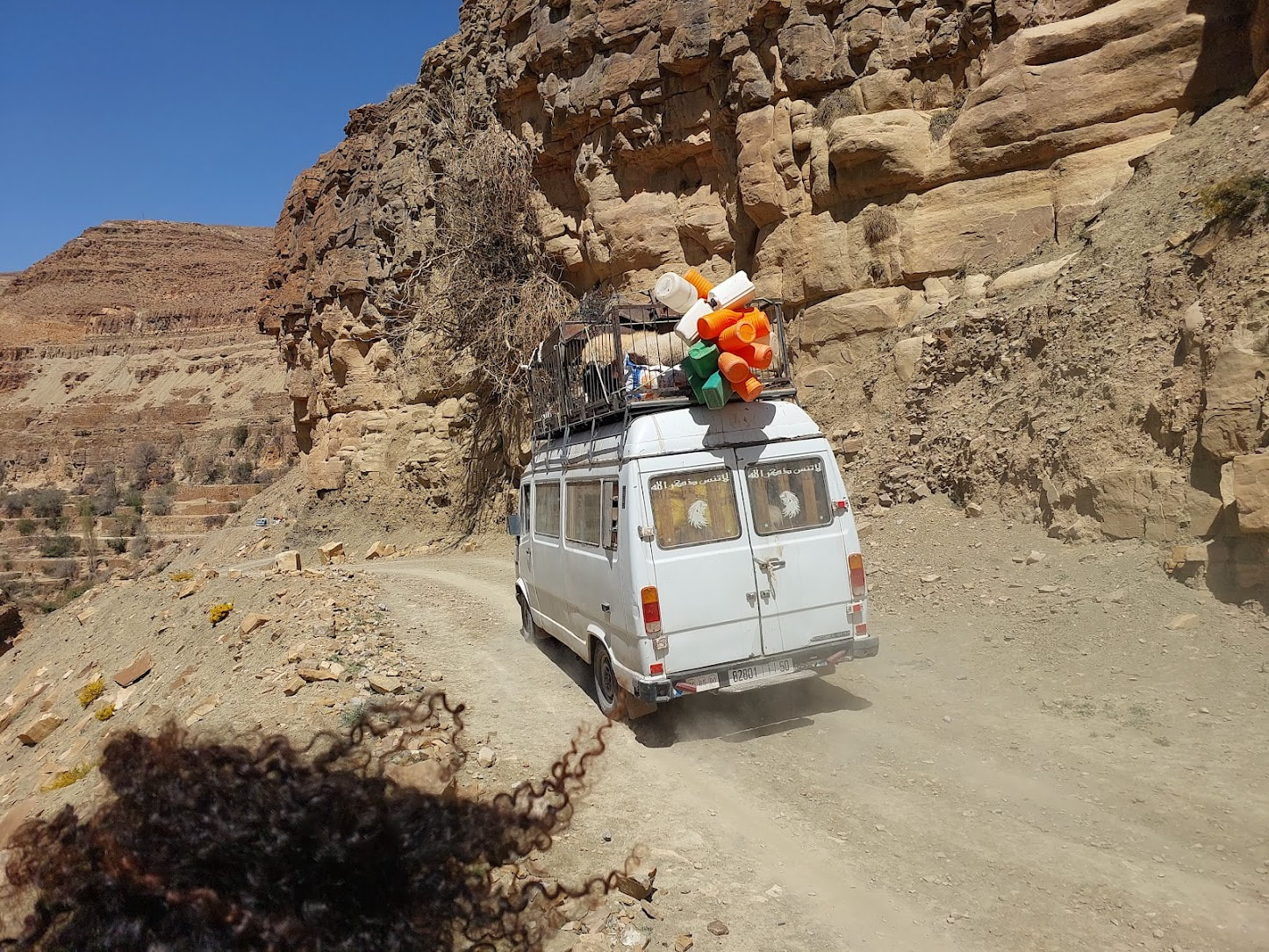
- In the Atlas, informal local buses and collective taxis will usually take your bike, often strapped to the roof. The most reliable option is a white “taxi collective” with roof racks and space for up to six passengers.
Rental cars are widely available, but bike racks are not. For MTB trips, it’s often easier to hire a driver with a suitable vehicle. The Atlas Mountain Trails Network can help arrange transport.
When to go
SpringApril–early June
Spring is the best season for MTB trips in the Atlas. Temperatures are moderate (15–25°C), valleys are green after winter rains, and conditions are generally stable. Nights can still be cold (5–15°C), and occasional rain or snow on high peaks is possible in March and April.
Late autumnOctober–early December
Late autumn also offers good riding conditions, though water sources may be limited and vegetation is drier.
Summer
Summer is extremely hot, often exceeding 40°C in lower valleys. From late August to September, expect thunder and locally heavy rain fall in the afternoons, making the valley and mountain roads very dangerous for riders.
Winter
Winter brings snow above 2,000 m and most of the annual rainfall.
Bike and repair
Choose a light but rugged MTB such as a Cross‑Country or Down‑Country setup. Expect long climbs, technical descents, and unpredictable weather. A tire width of 2.2–2.4 is ideal. Several segments include technical singletrack and extended hike‑a‑bike sections. Whatever bike you bring, you must be able to carry it.
Since the launch of the project, some riders on gravel bikes and with a full bikepacking setup including bike bags, have followed our routes. This works for strong riders, but you need to be aware of some extended bike and hike sections as well as downhill oriented descents.
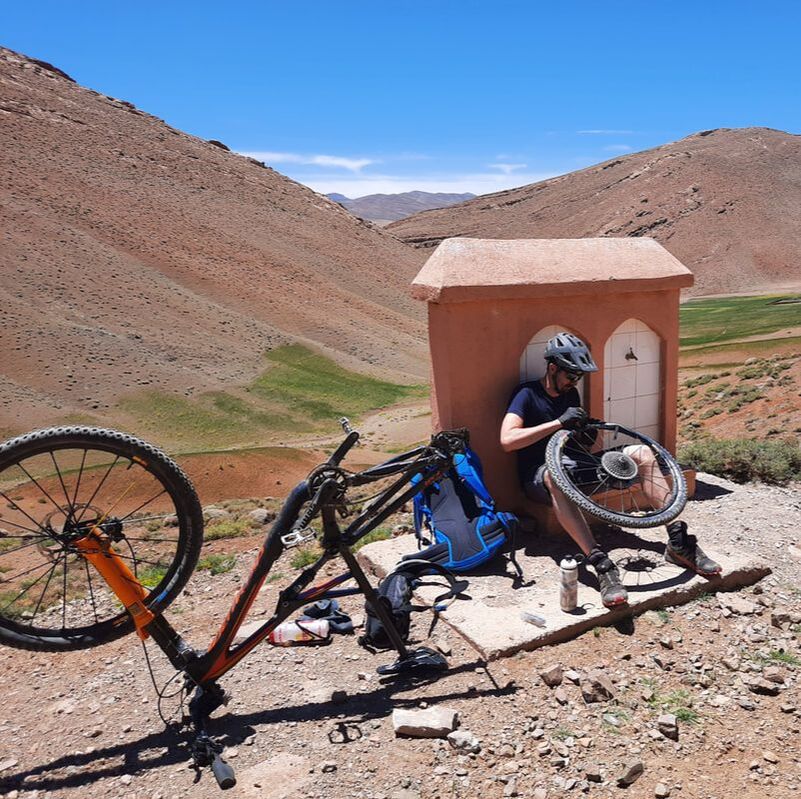
There are no professional MTB repair services along the routes. Travel prepared and carry essential spare parts. Major cities — especially Marrakech — offer reliable bike shops (see contacts). In case of a breakdown, spare parts can sometimes be sent into the mountains via local buses and taxis, but a damaged bike part you cannot fix yourself may end your tour.
Packing
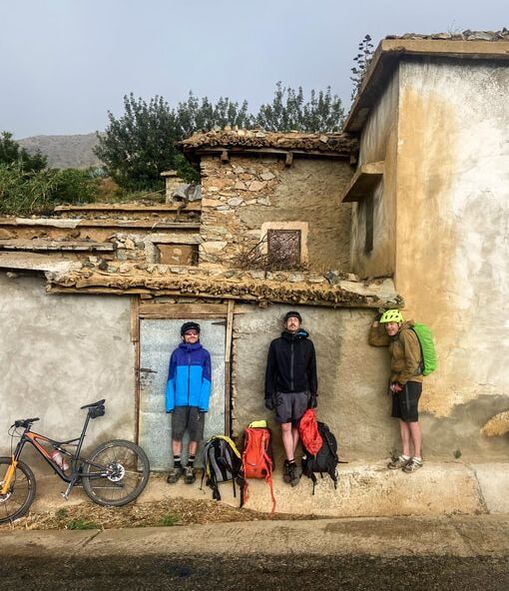
Go as light as possible. Despite clever bike‑packing setups, an MTB backpack is essential in the Atlas. A 40–45 L pack with multiple pockets and space for a 2.5–3 L hydration bladder works best. Heavy bike bags reduce fun on singletrack and become difficult during hike and bike sections.
- Clothing: Expect big temperature swings. Even in spring, bring warm layers and proper rain protection. Most days you’ll ride in shorts and a short‑sleeve jersey, but cold mornings and sudden weather changes are common.
- Spare Parts & Tools: Use your own bike if possible and carry the spare parts you rely on. There is no repair service on the routes, and a problem you cannot fix yourself may end your tour.
- Nutrition: Daily food can be bought along the way. For extra energy, pack a few power bars, magnesium tablets, and a nut–dried fruit mix.
- First Aid & Care: Carry a complete First Aid Kit, including emergency blankets, anti‑inflammatory medication, and antihistamines. Pack sun protection and basic toiletries in micro‑doses to reduce weight.
Safety
The Atlas is a high‑mountain environment with sudden weather changes, rockfall, scarce water, and challenging navigation. Sun exposure can be intense, and some plateaus have no water at all.
Emergencies: Rescue services exist but are not specialised in mountain sports, and response times can be long. Emergency phone numbers:
- Royal Gendarmerie: 177
- Fire brigade: 15
- Police: 19
Navigation: Study the terrain carefully before riding. Good map knowledge helps you avoid steep traps, difficult slopes, and hazardous terrain.
Share Your Whereabouts: Avoid riding alone. Always tell someone your planned route and share your live GPS position with a contact who could organise help if needed.
Wildlife & Allergies: Spring brings increased insect activity. If you’re sensitive to bites, stay alert around beehives and carry antihistamines.
General Reminder: The Atlas Mountains are wild and remote. Professional support is not guaranteed. Always plan extra time and be prepared for unexpected situations.
Useful contacts
Marrakech:
Repair and Rental
Maison VTT, Mustafa: +212662659514 / +212 671346347, Maps
Atlas Sport https://rent-bike-morocco.com, +212 5244-47019
Pikkala Bikes https://pikalabikes.com
Transport
General transport service: Walid (Marrakech and Region): + 212 661 361466
Bike transport service: Omar (Asni), +212 662-660447.
Rabat/Temara:
Hamza Bike Temara, Rue Moulay Ali Chérif, +212 664-279624, Maps
Middle Atlas/Tazekka
Bike rental (basic) Tazekka Park - Tazzeka Park Club